How Shonda Rhimes is Normalizing Cultural and Racial Diversity in Television
- Sarah Neff
- Apr 7, 2022
- 5 min read


Shonda Rhimes at the Invision for the Television Academy on January 15, 2021. Photograph: Dan Steinberg/AP Images.
Shonda Rhimes is a powerful screenwriter, producer, and author. She is best known for her hit ABC shows Greys Anatomy, Scandal, and How to Get Away with Murder. All shows with power-leading female characters. Rhimes breaks free from the traditional female story that women are given and even holds herself to a certain standard. She is unapologetically brilliant, independent, and powerful.
In fact, Rhimes told Oprah Winfrey that she personally “[has] never wanted to get married. I never played bride. I was never interested.” Instead, she went on to adopt three children and continue working hard in her field as an extremely successful storyteller. Rhimes has created important narratives in all her shows and has successfully created diverse, unique, and powerful characters that separate her from all other television shows
Greys Anatomy

"Grey's Anatomy" cast, (L-R top row) Ellen Pompeo, Kate Walsh, Chandra Wilson, Sandra Oh, Katherine Hiegl, Sara Ramirez, T.R. Knight, (L-R bottom row), Justin Chambers, Patrick Dempsey, James Pickens, Jr. and Eric Dane pose in Los Angeles in this file photo. | (Photo: Reuters/Lucy Nicholson)
Greys Anatomy was Rhimes’ first huge hit and television success. She brought a remarkable set of characters. Audiences saw powerful black characters, Latinas, Asians, and a wide range of sexual identities and all sort of genders. As her show progressed, complex characters were represented.
According to an interview Rhimes had with the New York Times, she explained how during casting she didn’t specify the ethnicities of her characters’ and rather sought out actors for their acting. In the show alone, all minor extra characters are white apart from one janitor to counteract Hollywood’s stereotypes of having it the other way around.
While most of the show is composed of predominantly white characters, it represents black characters by 400% by representing them in roles of power. In doing this, Rhimes successfully gives traditional roles but represents them in vastly untraditional ways – thus we see much hidden diversity that we may not see otherwise.
Greys Anatomy does an impressive job at keeping up with political and social issues that plague America. The show discusses heavy topics such as sex trafficking, sexual assault allegations from people with power, mental health problems, disability, addiction/alcoholism, the killing of George Floyd, covid-19 impacts on health care, and sexual assault. Representing such hot topics helps bring awareness to issues keeping the show up to date making it feel even more realistic.
Scandal

The cast of Scandal at PaleyFest 2016 in Los Angeles. Photograph: Michael Kovac/Getty Images for Paley Center
Another hit series from Shonda Rhimes, Scandal which aired from 2012-2018 on ABC was a prime time show that gave us a glimpse of hidden diversity. The show was led by actress, Kerry Washington. Washington became the first black woman to lead a network drama in 40 years.
“I didn't know from the beginning that I wanted Olivia Pope to be a black woman, I knew from the beginning that Olivia Pope was a black woman,” Rhimes told BuzzFeed News. Taking a leap of faith by normalizing hidden diversity on screen, Rhimes proves that diverse representation in television can be successful. After all, Scandal was a seven-season long television show.
Washington’s character is indefinitely representative of black folks. Rhimes created her character to be costumed as professional, powerful, and brilliant. While Olivia Pope, Washington’s character was decorated with imperfections, unlike any other show, Olivia Pope was powerful and demanding. She was not soft, charismatic, or anything of that stereotype but she was a fighter, a commander, and a professional. Rather, she broke the glass ceiling and Rhimes avoided making her fall victim to the black girl tropes that can be seen in other shows.
As for the narrative, the show tackled tough topics such as racial politics, sexism in the workplace (which is something Rhimes is familiar with). The show also included toxicity and power in workplace, PTSD, and torture. Rhimes created a political economy that all took place in the White House which can be presumed to be based off American history. Pertinent legal investigations were thrown away, intermarital scandals happened left and right, secrets were kept through intense forms of blackmail, and US government was viewed to be influenced heavily by greed, love, pride, and personal gain.
By normalizing a dysfunctional, complicated, and complex characters while also having a relatively diverse cast, Rhimes was able to open a lot of doors that were previously shut.
How to Get Away With Murder

Viola Davis, Shonda Rhimes, and Ellen Pompeo attended a special event presented by Toyota and co-hosted by ABC and Time Inc.'s Entertainment Weekly, Essence and People in celebration of ABC's #TGIT line-up, Saturday, September 26 at Gracias Madre in Los Angeles, CA. Image source: ABC/Image Group LA / flickr. Licensed by YCC BY-ND 2.0.
Shonda Rhimes’ production company, known as Shondaland, created a six-season long show called How to Get Away with Murder. This television show starred award-winning Viola Davis as the lead. Davis won Emmy for Outstanding Lead Actress in a Drama Series and became the first woman of color to do so.
Just as the others, this show brought visibility to a variety of cultural differences on screen. There were characters that were immigrants from DACA, there were third culture kids, and a set of racially diverse characters.
Davis’ character brought a set of struggles to the screen from alcoholism to sexual abuse, to being a black LGBT woman in America. She took on cases as a lawyer that spoke to a bigger issue in America: the mass incarceration of black Americans.
The main team of characters consisted of five law school students where each came from a different place. Whether that was foster care, Mexico, or adoption, or even from money. The show consists of a dark and tragic plot line making each character complex and imperfect.
Having a show with a bisexual, powerful, independent woman of color leading is not the traditional narrative we see in television. Rather, this show reflects many social issues America faces today breaking away from heteronormative narratives.
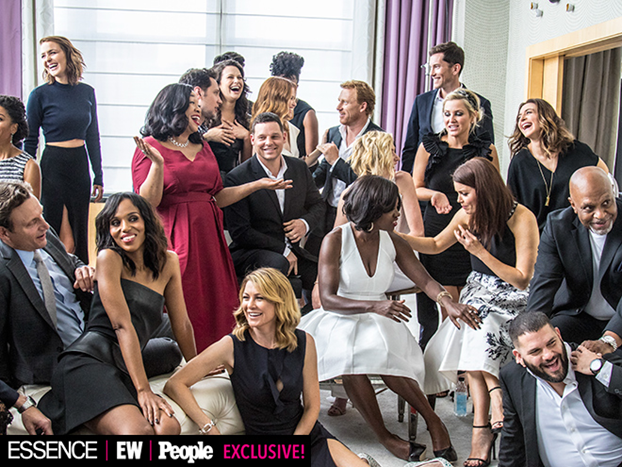
The stars of ABC's hit Thursday night shows and their executive producer Shonda Rhimes (in red) gathered at the Jewel Suite at the New York Palace hotel for an exclusive photo shoot in collaboration with PEOPLE, Entertainment Weekly and Essence. Photograph: Mark Peterson/REDUX
Shonda Rhimes and her production company Shondaland have not fallen short on representing cultural differences and racial diversity. She puts reality on our screens by adding visibility. Audiences finally get to see the world as it is but in fictional television shows. Shondaland has normalized these diverse characters, breaking stereotypes, and treating them with the same sexual freedoms and visibility as traditional white heteronormative characters.


Comments